How to choose the Basic or Comprehensive module in VSME
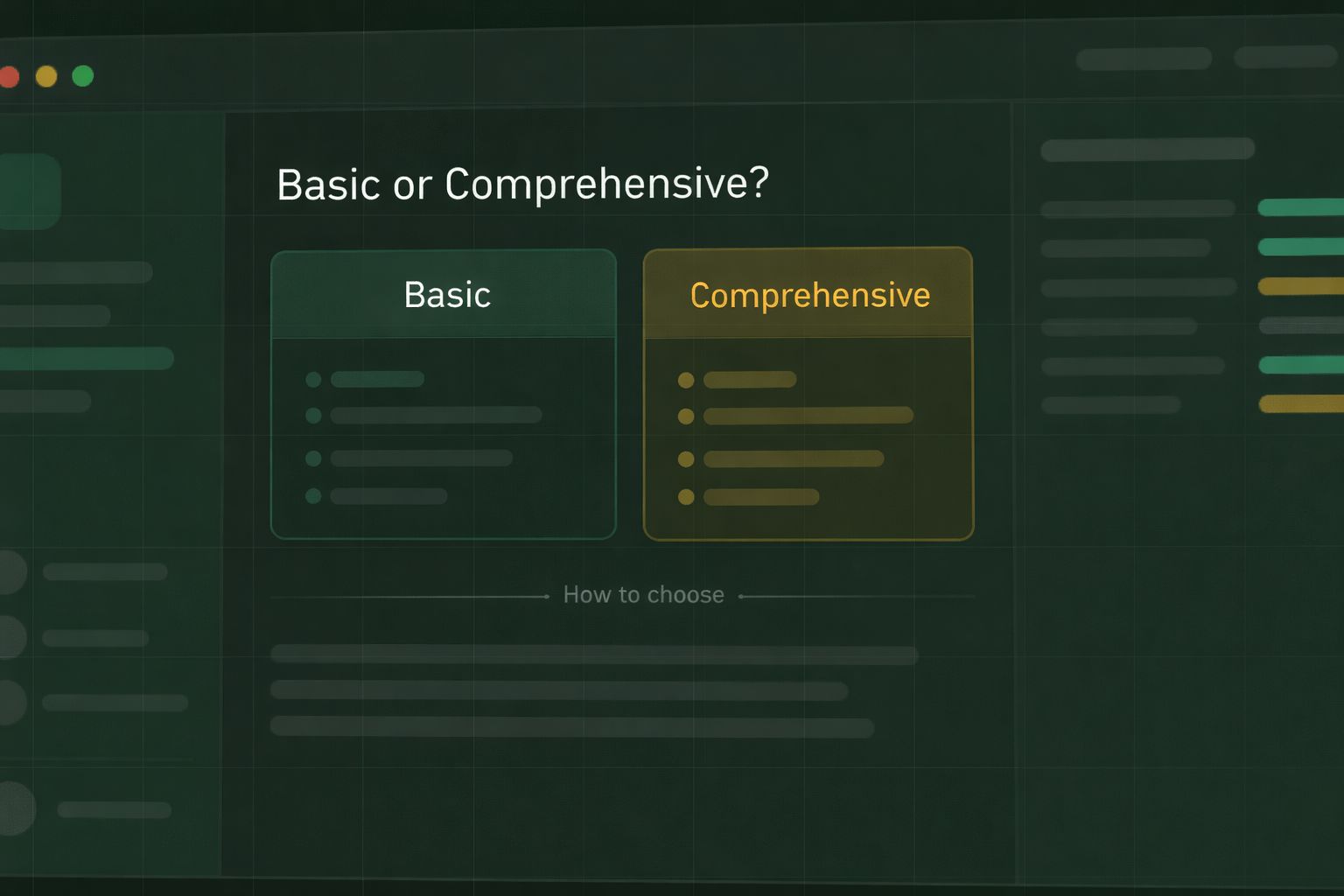
Most SMEs do not fail at VSME reporting because the standard is “too hard”. They fail because they pick the wrong level of ambition for year one, then stall.
VSME gives you two options: Basic and Comprehensive. The trick is choosing the one that matches your stakeholder pressure, your data maturity, and your capacity.
1) What Basic and Comprehensive really mean in VSME
Basic Module is the “target approach” for micro-undertakings and the minimum requirement for other undertakings using VSME.
It includes disclosures B1 and B2, plus the Basic Metrics B3 to B11.
Comprehensive Module adds datapoints on top of Basic that are more likely to be requested by banks, investors, and corporate clients.
One important rule: you cannot do Comprehensive without Basic. Basic is a prerequisite.
A slightly opinionated take: Basic is not “the cheap version”. It is the version most SMEs should do first, because finishing and reusing a credible baseline beats chasing a perfect report that never gets published.
**Presentation version: **How to choose between the Basic or Comprehensive module in VSME.pdf to present for your organization.
For more details. Use the VSME data checklist (Excel): VSME data preparation checklist.xlsx a clear list to know what to report in Basic vs Comprehensive module.
Video version of How to choose the Basic or Comprehensive module in VSME:
2) The fastest way to choose in 5 minutes
Answer these questions:
A. Are you getting frequent ESG requests today?
• If you get occasional requests, Basic usually covers most needs.
• If you receive detailed bank, investor, or large-customer requests, Comprehensive may be worth it.
B. Do you already have targets and plans you can stand behind?
Comprehensive includes items like GHG reduction targets and climate transition planning when relevant (C3), plus climate risk information if identified (C4).
If you do not have these yet, Basic is often the right starting point.
C. Do you have capacity for more than a “minimum viable report”?
If you have one person doing reporting off the side of their desk, Basic is usually the realistic choice.
Quick rule of thumb
• Choose Basic if your goal is: “Be credible and consistent this year.”
• Add Comprehensive if your goal is: “Meet deeper stakeholder requests and show maturity.”
3) When VSME Basic is enough for your organization
Basic is usually enough if:
• You want a baseline report you can reuse for suppliers, customers, and lenders.
• Your data is still being collected manually in parts of the business.
• You want to finish in a predictable timeframe.
• You mainly need to answer standard ESG questions, not investor-grade detail.
Also, the European Commission’s recommendation is intended to reduce the burden on SMEs and make it easier to respond to sustainability information requests from value chain partners and financial institutions.
Basic aligns well with that “reduce burden, increase consistency” goal.
4) When VSME Comprehensive is worth it for your or organization
Comprehensive makes sense when:
• Your bank, investors, or major customers ask for more than a baseline.
• You operate in a context where climate and workforce topics need more explanation than a simple metric table.
• You already have policies, governance, targets, and risk processes documented and used in practice.
• You want to reduce follow-up questions and “one-off questionnaires”.
The standard itself frames Comprehensive as additional datapoints likely to be requested by banks, investors, and corporate clients on top of Basic.
A practical sign you should go Comprehensive: you keep getting the same follow-up questions after sending your sustainability data. That usually means you are missing narrative context and forward-looking elements.
5) A step-up approach that works for most SMEs
For most organizations, the best strategy is:
1. Publish Basic first.
2. Track which stakeholders ask for additional information.
3. Add only the relevant Comprehensive disclosures next cycle.
This prevents a common trap: implementing Comprehensive as a “big project” when you really needed a reliable baseline.
6) Common decision mistakes for VSME-reporting
Mistake 1: Choosing Comprehensive because it “sounds better”
More disclosures do not automatically mean more credibility. Credibility comes from consistency, clear boundaries, and data you can explain.
Mistake 2: Skipping Basic and trying to jump to Comprehensive
You cannot. Basic is a prerequisite by design.
Mistake 3: Treating Comprehensive as mandatory
It is not mandatory. VSME is voluntary, and the point is proportionality.
Mistake 4: Starting with targets you cannot support
If you publish targets, expect questions about baselines, scope coverage, and actions. If you have targets, great. If you do not, start Basic and build toward targets when the work is ready.
7) How Verdnt supports both options
Verdnt is a free web-app designed to support VSME reporting in a way that is guided and realistic for SMEs. Verdnt guides you through the reporting process step by step so you can complete Basic first and then extend into Comprehensive when it makes sense.
When your report is finished, Verdnt automatically generates a fully tagged iXBRL report so your sustainability information can be shared in a structured, machine-readable format.
Verdnt Free VSME Reporting Platform
• Download the VSME data checklist (Excel): VSME data preparation checklist.xlsx a clear Basic vs Comprehensive “data to collect” checklist with owners, sources, and evidence fields.
• Get the free VSME reporting platform Verdnt app here: https://verdnt.app/